Whole Body Vibration Plate: A Smarter Daily Routine
A whole body vibration plate is not a shortcut around training, walking, mobility work, or restorative sleep. Used with intention, however, it can be a remarkably efficient addition to the routines that help you stay strong, steady, and ready for what matters most - from a demanding training session to a long day on your feet.
Whole-body vibration has moved well beyond the novelty machines once tucked into the corner of a gym. Professional-grade platforms now offer controlled frequency settings, stable construction, and enough range to support different goals: a short activation session before exercise, gentle movement after travel, or a consistent practice that complements strength and balance training.
For adults who see longevity as the ability to keep moving confidently and independently, the value is not in chasing intensity for its own sake. It is in creating a routine you will actually use.
What a Whole Body Vibration Plate Does
A vibration platform creates rapid, controlled movement beneath your feet. As the surface moves, your body continuously makes small adjustments to maintain position. Those adjustments engage muscles throughout the feet, ankles, legs, hips, and trunk.
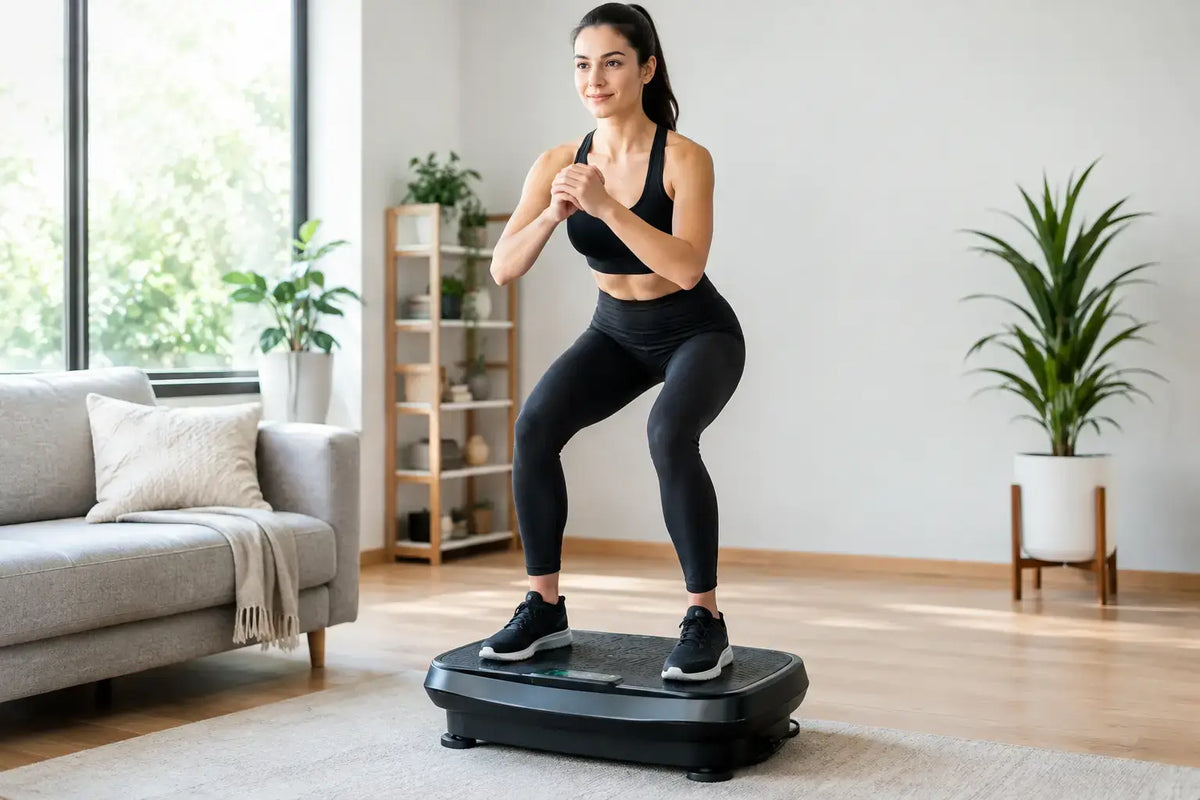
The experience can look simple: stand on the plate with softly bent knees, maintain an upright posture, and let the platform run for a few minutes. Yet the body is actively responding to the changing surface. Depending on the frequency, amplitude, stance, and exercise selected, vibration may make familiar movements such as squats, calf raises, or supported holds feel more demanding.
This is why the strongest case for vibration is as a complement, not a replacement. A plate can add variety and a different training stimulus to a well-rounded program, while giving you a convenient option on days when a full workout is not realistic. Research on whole-body vibration has explored its potential role in muscle activation, balance, flexibility, circulation, and physical function. Results vary by population and protocol, so the practical takeaway is measured: consistency and sensible programming matter more than dramatic promises.
Why Frequency Range Matters
Not all platforms deliver the same experience. Frequency, measured in hertz (Hz), refers to how many vibration cycles occur each second. Lower settings tend to feel more controlled and approachable, while higher settings can create a more demanding stimulus.
A broad, usable range is valuable because your needs are not identical every day. A beginner learning proper positioning may prefer a lower frequency and brief session. Someone incorporating vibration into a warm-up may choose a moderate setting with bodyweight movements. More experienced users may progress gradually, provided their form remains sound and the session still feels controlled.
The HEBĒ BioKinetic Plate™ operates from 10 to 50 Hz, a range designed to support both gentle daily use and more athletic conditioning protocols. That range is only useful when paired with stability, clear controls, and a platform engineered to feel secure underfoot. Premium equipment should make it easier to focus on your stance and breathing rather than compensating for an unstable machine.
Amplitude also matters. This describes the distance the platform travels with each movement. Frequency and amplitude work together to shape the overall feel of a session, which is why comparing one specification in isolation rarely tells the full story. Build quality, platform size, motor performance, handholds where applicable, and weight capacity deserve equal attention.
How to Use a Whole Body Vibration Plate Well
Start with posture, not power. Place your feet about hip-width apart, keep a soft bend in your knees, brace gently through the midsection, and avoid locking the joints. The goal is to stay balanced and composed, not to withstand as much vibration as possible.
For your first few sessions, try two to five minutes at a comfortable lower setting. Step off, notice how you feel, and allow time between sessions to understand your response. Many people find that short, regular exposure fits more naturally into their lives than occasional long sessions.
As comfort and confidence build, the plate can become part of several practical routines. Before a workout, a brief session with a relaxed athletic stance, shallow squats, or calf raises can help you feel more awake and physically prepared. After a walk, strength session, or recreational sport, a low-to-moderate setting may provide a calming transition into recovery time. On busy workdays, a short session can also be a useful prompt to stand up, shift position, and reconnect with your body.
Movement quality should always lead the session. If you cannot hold your posture without gripping, tensing your neck, or shifting awkwardly through your feet, lower the setting or simplify the exercise. More is not automatically better.
Three effective starting formats
A simple warm-up can be as little as three minutes: one minute of a comfortable standing position, followed by two minutes of slow calf raises or shallow squats. Keep the range of motion easy and controlled.
For a strength-focused session, use the plate as one station in a larger workout. Try three short rounds of supported squats, an athletic hold, and calf raises, resting between rounds. This works best after you already have a foundation of sound bodyweight movement.
For a low-key daily practice, stand comfortably for a few minutes at a lower setting after a walk or near the end of the day. Think of it as a moment of intentional movement, not a treatment or a substitute for recovery fundamentals such as hydration, nutrition, sleep, and appropriate training volume.
Who May Benefit Most
A vibration platform can be especially appealing for active adults who want an efficient way to add lower-body engagement and balance-focused work to a home routine. It can also suit former athletes who still value physical readiness but prefer lower-impact options, as well as professionals who spend long stretches sitting and need a practical reason to move.
For adults over 40, the appeal often comes down to preserving capability. Strength, balance, mobility, and confidence in movement become increasingly valuable over time. A platform will not build these qualities on its own, but it can support the habits that do: regular resistance training, walking, purposeful movement, and enough recovery to repeat those habits week after week.
Fitness facilities and recovery studios can use vibration platforms in a similarly thoughtful way. The best setting is not necessarily a high-energy, one-size-fits-all class. It may be a guided warm-up area, a balance station for clients working with a coach, or a brief addition to an established recovery experience.
When to Pause and Ask a Professional
Whole-body vibration is not appropriate for everyone at every moment. If you are pregnant, have a recently implanted medical device, have an acute injury, are recovering from surgery, have a history of blood clots, or have a health condition that affects balance or bone health, speak with your qualified health professional before using a vibration platform.
The same practical rule applies if vibration causes pain, dizziness, numbness, or unusual discomfort: stop and reassess. Wellness technology should help you build a sustainable routine, not encourage you to push through warning signs.
What to Look for Before You Buy
A serious whole body vibration plate should feel like a piece of training equipment, not a disposable gadget. Look for a frequency range that supports progression, a stable and generously sized standing surface, a capable motor, straightforward controls, and construction that inspires confidence during movement.
Consider where it will live and how you will use it. If it will sit in a premium home gym, a dedicated recovery room, or a commercial wellness space, its design, durability, and ease of cleaning all matter. If multiple people will use it, clear programs and accessible settings make consistency easier across different fitness levels.
Most importantly, buy for the routine you intend to keep. The right platform is one that invites regular use, fits naturally into your space, and supports your larger commitment to staying capable.
A few focused minutes on a vibration plate will never replace the satisfaction of a strong walk, a well-executed lift, or a full night of sleep. But when it helps you move with greater intention today and return to the activities you love tomorrow, it earns its place in a longevity-minded home.

Written by Admin
Founder of HEBĒ Longevity™. More than 40 years of training and more than two decades working with PEMF and complementary wellness technologies.