Red Light Therapy for a Stronger Daily Ritual
A recovery ritual only works when it fits into real life. Red light therapy earns a place in a well-designed home wellness space because it can be quiet, comfortable, and easy to repeat - before a demanding day, after training, or as part of an evening wind-down. The appeal is not a dramatic one-time session. It is the discipline of giving your body a consistent, low-friction moment to recover.
For people who invest in performance and longevity, the practical question is not whether red light is interesting. It is whether the device, protocol, and habit are designed well enough to use consistently.
What red light therapy is actually doing
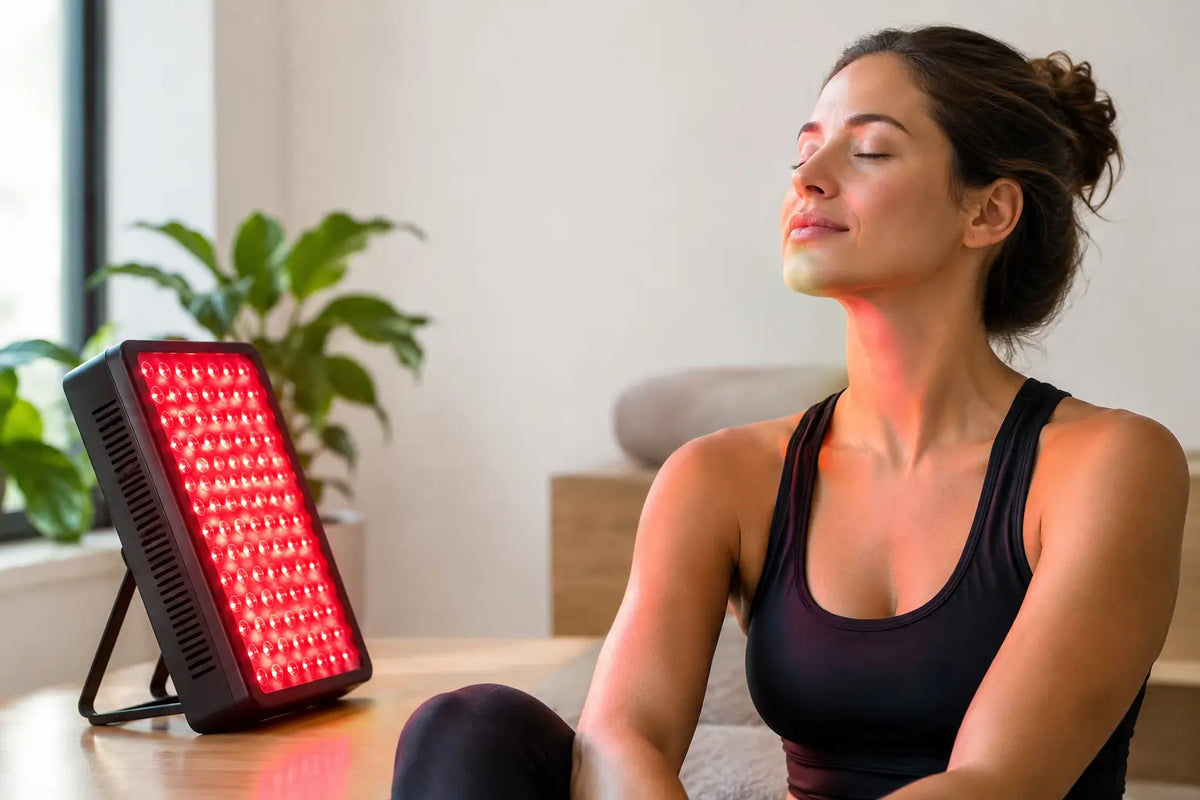
Red light therapy, often discussed under the broader term photobiomodulation or PBM, uses specific bands of visible red and near-infrared light. Red light is visible to the eye, while near-infrared light sits just beyond the visible spectrum. These wavelengths are studied for their interaction with tissue and cellular processes, particularly in the context of recovery, skin appearance, and general wellness.
The distinction between red and near-infrared light matters. Red wavelengths are commonly used closer to the skin's surface. Near-infrared wavelengths are not visible, and are generally selected for their ability to reach deeper tissue. A thoughtful full-body system may include both, rather than treating all light as interchangeable.
For example, 660 nm red light and 850 nm near-infrared light are widely used wavelength choices in at-home PBM equipment. The numbers alone do not determine quality, but they provide a useful starting point. A credible device should be clear about the wavelengths it uses and how the light is delivered.
Why output and exposure matter
A red light therapy session is not defined by color alone. The meaningful variables include wavelength, irradiance, treatment distance, coverage area, and session duration. Together, they influence the dose of light that reaches the body.
Irradiance describes the power delivered over a given area, often expressed in milliwatts per square centimeter. Higher output is not automatically better. Very low output can make sessions impractically long, while excessive exposure may not improve the experience and can make consistency harder. The goal is an appropriate dose, delivered evenly, in a session that suits your routine.
Coverage changes the equation as well. A small panel can be useful for a focused area, but it asks you to reposition repeatedly if your aim is broad recovery. A full-length blanket or larger-format system can make a more complete session feel simple: settle in, select a program, and let the session run without managing loose applicators or moving from one zone to another.
Distance is equally relevant for panel-style devices. Light intensity drops as you move farther from the source, so a protocol that works at a few inches may not translate across the room. Follow the device maker's instructions rather than assuming that more time, more proximity, or more sessions will always be productive.
What a well-designed session feels like
The best home protocols are uneventful in the right way. You should not need a technical checklist before every use, and a session should not leave you wondering whether you configured the device correctly.
For many people, short sessions of roughly 3 to 10 minutes are easier to sustain than ambitious routines that interrupt the day. A morning session may fit well before a workout or workday. An evening session may become a quiet transition from training, travel, or screen-heavy work into rest. The ideal timing depends on your response and your schedule.
Comfort supports consistency. If a device is awkward to position, too bright for the setting, or demanding to operate, it can become another expensive object in the recovery room. Consider the physical experience alongside the specifications: whether you can recline, whether the format supports broad coverage, how quickly the session begins, and whether preset programs remove unnecessary decisions.
HEBĒ's Red/NIR Blanket pairs 660 nm red and 850 nm near-infrared light in a full-length format designed for this type of intentional, at-home ritual.
Setting realistic expectations
Red light therapy is best approached as a supportive wellness practice, not a substitute for sleep, nutrition, training management, medical care, or rehabilitation guidance. Research across PBM applications is promising, but results vary with the individual, the protocol, the device, and the outcome being measured.
Some users are drawn to red light for post-activity recovery, others for skin-focused routines, and others because they want a calmer way to close the day. These goals may call for different approaches. Someone using light around a training schedule may prioritize regularity and body coverage. Someone focused on appearance may care more about targeted placement and a carefully controlled routine.
Give a routine enough time to become a habit before judging it. Rather than changing duration, frequency, distance, and device settings all at once, begin with the manufacturer’s recommended protocol. Notice how the sessions fit your energy, skin comfort, and broader recovery practices. Adjust one variable at a time when adjustment is appropriate.
How to choose red light therapy equipment for home
Premium equipment should simplify, not merely impress. Start with the format that aligns with how you will use it. A panel can suit targeted standing sessions and dedicated wellness rooms. A wearable or helmet can serve a highly specific routine. A blanket may be more natural for a reclining, full-body experience where ease and coverage are the priority.
Then look beyond marketing language. Clear wavelength disclosure is essential. So is transparent guidance on session duration, placement, coverage, and eye-use recommendations. A company should be able to explain what the device is designed to do without leaning on vague promises.
Build quality deserves attention because this is equipment you may use for years. Consider heat management, materials against the skin, timer controls, warranty coverage, and the quality of setup and support. For a substantial home wellness purchase, the service experience matters. A well-considered system should feel composed from delivery through daily use.
Finally, assess how the equipment fits with the rest of your recovery environment. Light therapy can complement compression, mobility work, strength training, vibration, breathwork, and restorative sleep. It does not need to carry the full burden of your wellness plan. In fact, it tends to make the most sense as one repeatable part of an integrated system.
A disciplined approach to frequency
Consistency is more valuable than intensity for most at-home users. Begin conservatively, particularly with a new device or a large treatment area. Use the prescribed session length and frequency, then let your response guide whether the routine remains comfortable and sustainable.
Avoid treating longer exposure as a badge of commitment. More is not always more with light-based wellness tools. The most effective routine is often the one you can repeat without disruption: a brief session after your workout, a reset between travel and dinner, or a quiet period before bed.
If you are combining red light therapy with other recovery modalities, resist the urge to stack everything into one elaborate ritual. On a demanding training day, you may choose light and compression. On a lighter day, a brief light session and mobility may be enough. Let the ritual serve the day you actually had.
Safety and sensible guardrails
Use red light therapy according to the manufacturer’s instructions, especially regarding eye exposure and protective eyewear. Do not stare directly into high-intensity LEDs. If you have a diagnosed eye condition, are using photosensitizing medication, have a history of light sensitivity, are pregnant, or are managing a medical condition, speak with a qualified clinician before beginning a new protocol.
Pause if you experience discomfort, unusual skin irritation, headaches, or any reaction that concerns you. At-home wellness technology should feel reassuringly straightforward. When it does not, step back and seek individualized guidance.
A refined recovery space is not built around doing more at every opportunity. It is built around a few tools you trust, placed where you will use them, and simple enough to become part of the rhythm of your life. Give red light therapy that standard: choose it carefully, use it consistently, and let the ritual earn its place.

Written by Admin
Founder of HEBĒ Longevity™. More than 40 years of training and more than two decades working with PEMF and complementary wellness technologies.